The Big Myth — Panama Hats Aren't From Panama
Here's the first thing your guide will tell you: the Panama hat is not from Panama. It never was. The iconic toquilla straw hat is woven in Ecuador — specifically in the provinces of Manabí and Azuay — by artisans who have practiced the craft for centuries. UNESCO recognized this tradition as Intangible Cultural Heritage in 2012.
So why is it called a Panama hat? During the construction of the Panama Railroad in the 1850s and the Canal in the early 1900s, workers and engineers wore these lightweight Ecuadorian hats to cope with the tropical heat. Panama was the transit hub — hats passed through here on their way to buyers in North America and Europe. The name stuck.
Theodore Roosevelt was photographed wearing one at the Canal construction site in 1906. That image circled the globe and cemented "Panama hat" in the international vocabulary forever.
What you can say is this: Panama is genuinely one of the best places on earth to buy one. Proximity to Ecuador, a deep trading history, and intense tourist demand mean that the selection here — especially in Casco Viejo — is excellent.
Hat Street in Casco Viejo
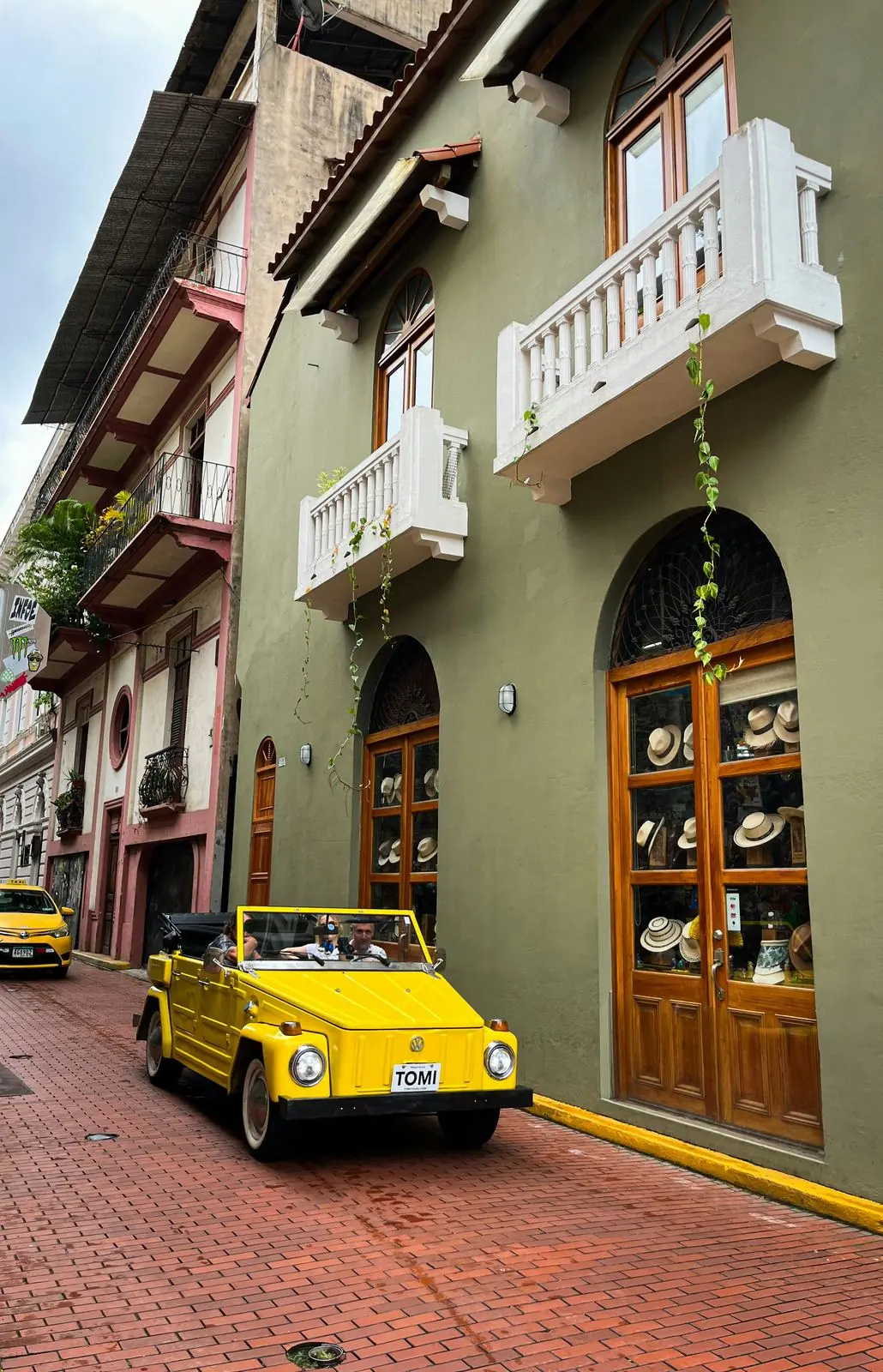
Avenida B is what locals call Hat Street. It runs through the heart of the old city and has become the de facto center for hat shopping in Panama City. You'll find a concentration of hat shops, market stalls, and artisan vendors within a two-block stretch, making it easy to compare quality and prices without trekking across town.
The street itself is worth walking for reasons beyond hats. Avenida B is lined with crumbling colonial facades, bougainvillea spilling over iron balconies, and murals painted directly onto 300-year-old walls. It's one of the most photogenic streets in the neighborhood and runs through areas that are still genuinely local — not yet fully gentrified.
Most hat shops on Avenida B open around 9am and close by 6–7pm. Sundays can be quieter. The best time to visit is on a weekday morning before the cruise ship passengers arrive.
Local tip: If a vendor won't let you examine the weave up close or rushes you, walk away. Reputable sellers welcome scrutiny — they know their product is worth it.
Best Shops to Visit
Jipijapa Panama
Avenida B, Casco Viejo
The most respected hat specialist in the neighborhood. Owner imports directly from Montecristi, Ecuador — the town that produces the finest toquilla straw hats in the world. Stock ranges from entry-level tourist hats to genuine Superfino grades with 2,000+ weaves per square inch. Staff can explain the difference and won't pressure you into the wrong purchase.
Artesanías El Güayacán
Avenida B corner, Casco Viejo
A multi-vendor artisan market with a strong hat section alongside molas, pottery, and leather goods. Hat quality varies stall to stall, but you can find solid mid-grade hats at better prices than the dedicated shops. Good for the budget buyer who knows what they're looking at. Bargaining is expected here.
Casa del Sombrero
Plaza Herrera area, Casco Viejo
Specializes in fashion-forward interpretations of the Panama — colored bands, wide brims, and lightweight rollable styles aimed at female travelers. Less focus on traditional grades, more on wearability and aesthetics. If you want something that looks great on Instagram and survives the journey home squashed in a carry-on, this is your spot.
Mercado de Artesanías Nacional
Near Casco Viejo, Cinta Costera
Panama's national artisan market is a 10-minute taxi from Casco Viejo and stocks hundreds of hats from multiple Ecuadorian and Panamanian suppliers. The sheer volume makes comparison easy but quality control is inconsistent. Best approached with some prior knowledge — visit Avenida B first to calibrate your eye, then come here for range and negotiating power.
Hat Grades Explained
Panama hats are graded by the fineness of the weave. The more weaves per square inch, the more expensive, the softer, and the more water-resistant the hat. Grades vary by supplier, but the widely used system breaks down roughly like this:
| Grade | Weaves / sq inch | Price range | Best for |
|---|---|---|---|
| Tourist / Fino | ~200–400 | $15 – $50 | One trip, beach use, gifts |
| Superfino | ~800–1,200 | $80 – $200 | Regular wear, quality souvenir |
| Extrafino | ~1,500–2,000 | $200 – $500 | Serious collectors, daily wear |
| Montecristi Fino | 2,000+ | $500 – $3,000+ | Heirloom quality, investment |
The highest-grade Montecristi hats take a single weaver 3–6 months to complete. They're so tight they can hold water. You're unlikely to find genuine Montecristi Fino at a street stall — they come with certificates and provenance documentation.
How to Spot a Quality Hat
You don't need to be an expert to avoid getting ripped off. Run through this quick checklist before buying:
- Hold it up to light. The weave should be tight and even, with no gaps or loose ends. Inconsistencies indicate lower grade or machine finishing.
- Check the center spiral. Flip the hat over and look at the crown from inside. A quality hat has a tight, centered spiral — the "rosette" — where the weaving begins. Off-center or chaotic spirals indicate lower quality.
- Feel the straw. Good toquilla straw is soft, supple, and slightly cool to the touch. Coarse, scratchy, or plasticky straw is a red flag — it may not even be toquilla.
- Test the brim. Bend it gently. A quality hat springs back. A cheap hat stays bent or cracks.
- Check the band and lining. Well-finished hats have clean sewn linings and properly attached bands. Glued or stapled fittings suggest corner-cutting throughout.
The roll test: A genuine superfino or higher can be rolled into a tube, passed through a ring, and spring back to perfect shape. Don't try this in the shop unless the seller invites you to — but if they demonstrate it themselves, that's a good sign.
What to Pay
Price depends on grade, and grade depends on what you want to do with the hat. Here's honest guidance:
Under $30: Decorative or gifting. Fine for a souvenir but don't expect it to last more than a season of regular use.
$50–$120: The sweet spot for most travelers. A solid Superfino that looks great, wears comfortably in heat, and will last years with basic care.
$150–$300: Serious quality. You're getting a hat you'll keep for a decade. Worth it if you actually wear hats in daily life.
$300+: Collector territory. Know what you're buying before spending here — ask for documentation of origin.
Bargaining is normal in market stalls but not in proper shops. In dedicated hat stores, the price is usually the price — though asking "is this your best price?" on a high-ticket item is always reasonable.
Rollable vs. Structured Hats
If you're buying to wear home in a carry-on, this matters. Standard Panama hats have a structured brim that doesn't travel well unless you're checking luggage or buying a hat box. Rollable versions — sometimes sold as "traveler" or "packable" style — are woven slightly differently to allow rolling without damage.
Rollable hats are not the same as low-quality hats. You can find rollable styles at Superfino grade. They're slightly less crisp-looking when worn than a structured hat, but the difference is subtle. Ask specifically for a rollable version if you need it — most shops stock both.
What to Avoid
- Hats sold inside souvenir shops near the waterfront. These are typically tourist grade, often machine-trimmed, and overpriced relative to quality.
- Hats described as "genuine Panamanian." The hat isn't from Panama — a seller claiming otherwise is either confused or being dishonest about provenance.
- Anything under $15. At this price you're getting synthetic straw or extremely coarse toquilla. It will not last and you won't enjoy wearing it.
- Hats with stiff, scratchy brims. Poor straw. Full stop.
- Pressure to buy immediately. Good sellers let you look, feel, compare. Anyone rushing you has something to hide about the product.
Walk Hat Street with a Local Guide
Our colonial walking tour passes through Avenida B. Your guide knows which sellers to trust, what fair prices look like, and how to spot a quality hat in 30 seconds. No pressure, no commission — just honest advice.
Book the Colonial Walking Tour