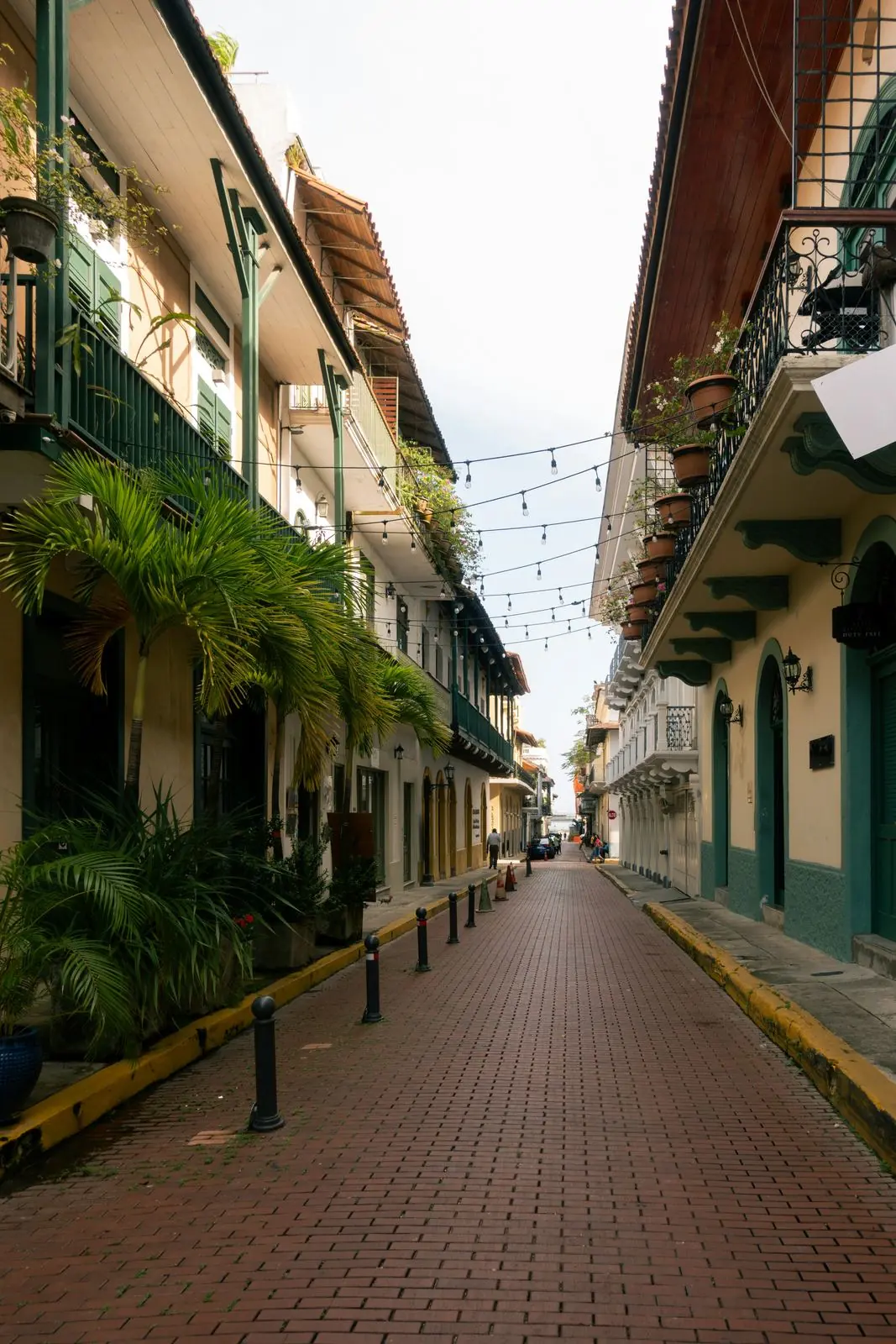
The honest picture: Casco Viejo is largely safe
Let us be direct from the start: the restored core of Casco Viejo is a safe neighbourhood for tourists, during both day and evening hours. Thousands of visitors walk its streets every week without incident. The neighbourhood has a visible police presence, active street life, and the natural security that comes from having people around at all hours.
We are not writing this article to scare you away from Casco Viejo. We are writing it because an informed traveller is a safer traveller — and there are two areas, one inside the neighbourhood and one directly adjacent to it, where extra awareness is warranted. Knowing where they are is simply smart.
✅ The bottom line: Stay in the restored core between Calles 3–9, stick to Avenidas A and B, don't wander north of Plaza Mayor late at night, and don't cross into El Chorrillo. Do all of that, and Casco Viejo is one of the most enjoyable and straightforward neighbourhoods to visit in Central America.
Zone 1 — the northern unrestored edge of Casco Viejo
The neighbourhood of Casco Viejo is still mid-transformation. The southern two-thirds — everything from the sea wall to roughly Plaza Mayor — has been substantially restored and is where you'll find restaurants, hotels, and well-lit streets. But the northern portion, from Plaza Mayor up to the Avenida de los Mártires entrance, tells a different story.
In this area, many buildings remain in their original crumbling state, still occupied by families who have lived there for decades. The streets are less lit, the tourist infrastructure disappears, and the neighbourhood's historic social tensions — between long-term residents and incoming investment — are most visible. It is not a no-go zone during daylight, and walking through it is genuinely interesting from a historical and social perspective. But it requires more awareness than the polished southern core.
At night, we recommend against wandering north of Plaza Mayor alone, particularly on Avenida A. Stick to Avenida B, which is better lit and has more active street life even in the northern sections.
In practice: if you enter Casco Viejo from the main pedestrian entrance on Avenida de los Mártires and walk south toward Plaza Bolívar, you will naturally pass through this zone. Just keep moving and be aware of your surroundings as you would in any unfamiliar urban area.
Zone 2 — El Chorrillo (the adjacent barrio)
El Chorrillo is not part of Casco Viejo — it is the barrio immediately to the north and east of the Casco Viejo peninsula. It is, however, geographically very close: when you walk north along Avenida de los Mártires and cross out of the historic district, you are in El Chorrillo within a few steps.
El Chorrillo has a difficult history. In December 1989, it bore the brunt of the US military intervention that removed Manuel Noriega from power — large portions of the barrio were destroyed during the bombardment and resulting fires. The neighbourhood has never fully recovered economically, and it remains one of Panama City's more challenging barrios.
For tourists, the practical message is simple: El Chorrillo is not on the tourist trail and there is no reason to enter it. It sits on the other side of Avenida de los Mártires from the Casco Viejo entrance. Don't cross that road into the residential blocks beyond. If you exit Casco Viejo on foot, have your Uber or InDriver pick you up from within the neighbourhood rather than walking out onto Avenida de los Mártires to hail a car.
This is not a reflection on the people who live in El Chorrillo — it is home to tens of thousands of Panamanian families. But as a tourist who does not know the neighbourhood, you have no reason to be there, and wandering in without context is not advisable.
Where is safe — a clear picture
To be absolutely clear about what is safe and enjoyable:
- Plaza de la Independencia (Plaza Mayor) and surroundings: Completely safe, day and night. Very active.
- Avenida B, Calles 3–9: The main restaurant and bar strip. Well lit, active, safe.
- Plaza Bolívar: Safe at all hours. Tourist police sometimes present.
- Paseo Las Bóvedas (sea wall promenade): Safe day and evening. Families use it. Good lighting.
- Plaza de Francia: Safe at all hours. Well-lit at night. Often quiet but not dangerous.
- The Tantalo/Ego y Narciso rooftop area: Extremely well-lit and populated on weekend evenings. Zero concern.
Common-sense safety tips for Casco Viejo
- Use Uber or InDriver: Don't take taxis hailed from the street. App-based rides are metered, reliable, and trackable.
- Don't flash expensive items: Camera bags, phones, and jewellery are the primary targets for opportunistic theft in any Latin American city. Keep your phone in your pocket when not using it.
- Walk with purpose: Even if you don't know where you're going, looking uncertain and consulting maps on a corner for five minutes attracts unwanted attention. Step into a café or restaurant to reorient if needed.
- Night safety: The restored core is safe after dark, but use Uber to return to your hotel rather than walking long distances late at night.
- Leave valuables at the hotel: There is no reason to carry your passport, extra cards, or large amounts of cash when sightseeing in Casco Viejo.
- Trust the locals: If a shopkeeper or restaurant staff advises you not to go a certain direction, listen. They know the neighbourhood better than any travel blog.
🗺 Joining a walking tour is the safest and most informative way to see the full neighbourhood, including the unrestored north. Our guides know which streets are fine and which to avoid, and you'll see parts of Casco Viejo that most tourists miss.
See Casco Viejo safely with a local guide
Our guides have lived and worked in Casco Viejo for years. We'll show you the whole neighbourhood — including the honest, complex parts — in a way that is safe, fascinating, and completely free to join.
Reserve Free Tour →