The short answer
✓ Short Verdict
Casco Viejo is generally safe for tourists in daylight hours, and safe for careful visitors at night in the main tourist areas. It is considerably safer than most Western travel advisories suggest — and far safer than many equivalent historic neighbourhoods in other Latin American cities.
The longer answer requires some context about Panama City, the neighbourhood's recent history, and the specific areas and situations that require more care.
Understanding Panama City's safety context
Panama City is not a high-crime city by Latin American standards. It is substantially safer than cities like Guatemala City, San José (Costa Rica), or Bogotá — all of which receive far less fearful coverage in travel media. Crime does exist, as in any city, but violent crime against tourists in the central areas is rare.
The US State Department and UK FCDO advisories for Panama are Level 1–2 ("exercise normal precautions" / "some caution"), the same rating given to large European cities like Rome and Paris. The headline warnings about Panama's northern provinces (Darién, Caribbean coast) do not apply to Panama City's tourist areas.
The most common crime affecting tourists in Panama City is pickpocketing and opportunistic bag-snatching — the same risks you'd face in any major city. Violent crime against tourists in Casco Viejo is very rare and typically involves situations that could have been avoided with basic precautions.
Is Casco Viejo itself safe?
Casco Viejo has undergone significant transformation over the past 15 years. Boutique hotels, restaurants, and cafés have moved in. Property values have risen. And with that change has come increased security presence — both formal (police foot patrols are regular and visible) and informal (the restaurant, hotel, and shop owners who have a vested interest in the area being safe for visitors).
Our guides have worked in Casco Viejo for a combined 30+ years. They are not aware of a single serious violent incident involving a tourist on a walking tour. That's not a guarantee of future safety — but it's a data point worth considering alongside the generic travel advisories.
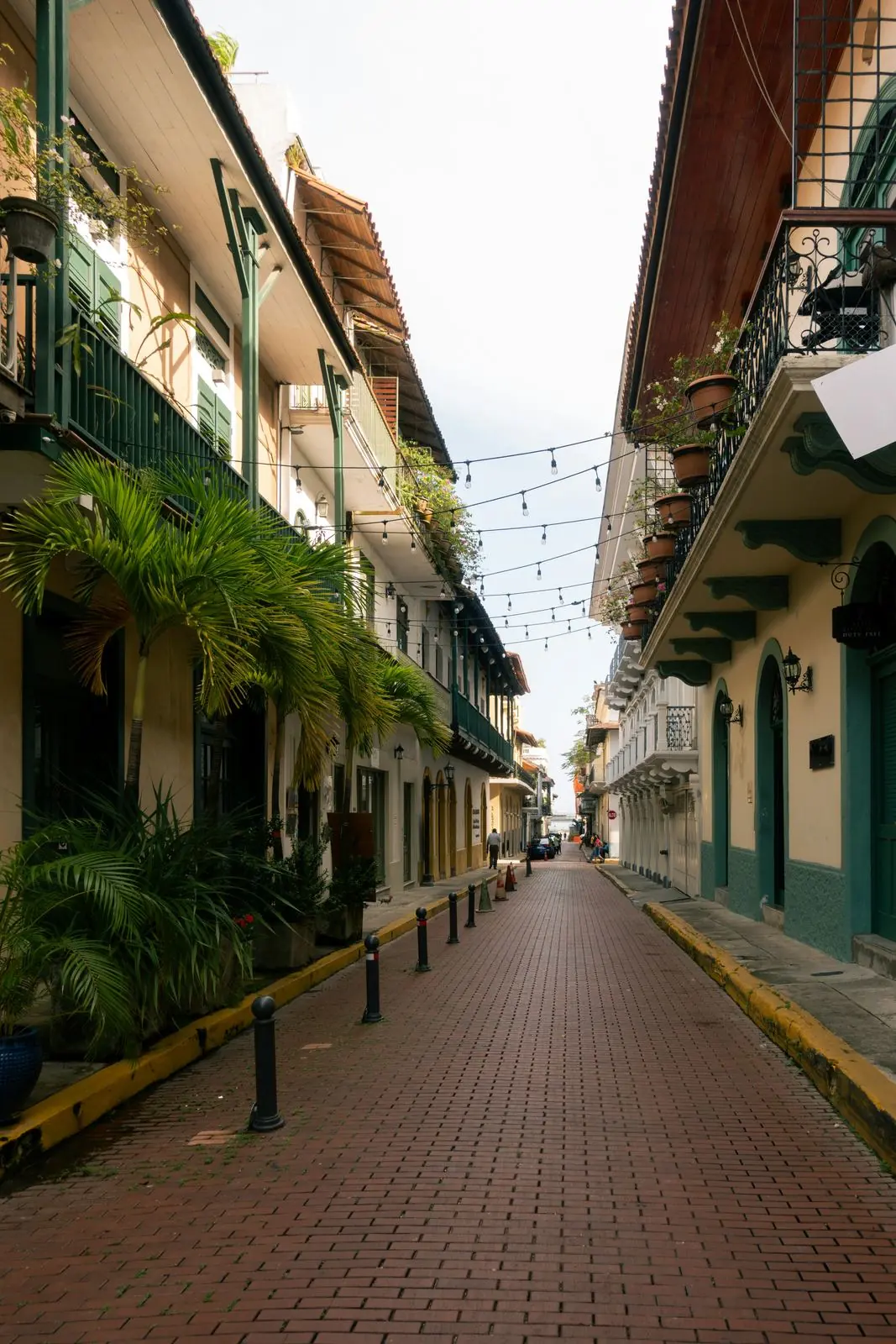
The neighbourhood's tourist area — the restored blocks around Plazas de la Independencia and Bolívar, Calle Primera, and the Paseo Las Bóvedas — are busy with visitors and well-patrolled during the day. These areas feel completely comfortable and safe in normal tourist behaviour.
Safe vs. caution zones within the neighbourhood
✓ Comfortable Areas
The restored tourist zone: Plaza de la Independencia, Plaza Bolívar, Calle Primera, Avenida Central (within Casco), the Paseo Las Bóvedas seawall, and the surrounding restaurant and hotel district. Safe for solo travelers, families, and evening visitors.
⚠ Exercise More Care
The less-restored northern edges of the neighbourhood, particularly late at night. The blocks immediately north of Avenida A as you enter the neighbourhood are transitional — not dangerous, but worth being alert in. The advice is simple: don't walk alone in unfamiliar streets late at night, and stay in well-lit areas after dark.
When is it safe — day vs. night
Daytime (7am–8pm)
Casco Viejo during the day is extremely comfortable for tourists. The streets are active, police patrols are visible, and the presence of restaurants, hotels, and tour groups creates a generally safe environment. Walking alone, even as a woman, is normal and unremarkable during the day.
Evening (8pm–midnight)
The main restaurant and bar area remains lively and safe in the evening. The neighbourhood's rooftop bars, restaurants, and the cultural events that happen here bring a mixed local-and-tourist crowd that keeps the main streets active. Using a taxi or Uber to return to your hotel at night is the standard practice — and is recommended rather than walking back through the entrance area late at night.
After midnight
The neighbourhood quietens significantly after midnight except on Friday and Saturday nights when clubs and bars stay open late. After midnight, exercise the same caution you'd use anywhere: stick to well-lit, populated streets; use Uber over local taxis; don't walk alone to your hotel.
Practical safety tips
- Use Uber: Uber operates throughout Panama City and is significantly safer than hailing random taxis. Always use it to get back to your hotel at night.
- Don't display valuables: Avoid walking with your phone out in less-busy areas. Carry a small amount of cash rather than a full wallet.
- Bag security: Keep bags in front of you in crowded areas. Cross-body bags are harder to snatch than backpacks.
- ATMs: Use ATMs inside supermarkets, banks, or hotels rather than street ATMs, especially at night.
- Trust your instincts: If a street feels uncomfortable, turn around. You're not being paranoid — you're being sensible.
- Tours are genuinely safer: Joining a walking tour (even the free one) means you're in a small group with a local guide who knows the neighbourhood intimately. This removes almost all of the above concerns during the tour itself.
Safety for solo female travelers
Solo female travelers are a significant part of our tour groups — and their experiences in Casco Viejo are generally positive. The main tourist areas are comfortable for solo women during the day. In the evenings, the same advice applies as anywhere: stay in well-lit areas, use Uber, and don't walk alone in unfamiliar streets late at night.
Verbal piropos (catcalls) can occur, as they do throughout Latin America, but they are generally not aggressive. Ignoring and walking on is the standard response. Our female guides walk these streets daily without incident.
We've written a more detailed guide specifically for solo female travelers: Is Panama City Safe for Solo Female Travelers?
Bottom line
Casco Viejo is a safe destination for the vast majority of tourists who visit it. The risks that do exist are the same ones present in any urban tourist area: pickpocketing, opportunistic theft, and the general risks of urban nightlife. These are managed with the same basic precautions you'd use anywhere.
The neighbourhood's transformation over the past 15 years has made it significantly safer than it was. The presence of boutique hotels, international restaurants, and a tourist economy means there is real institutional interest in visitor safety.
Don't let generic Panama travel advisories stop you from experiencing one of the most beautiful historic neighbourhoods in the Americas.
🚨 Emergency numbers in Panama: Police: 104 · Emergency: 911 · Tourist Police: +507 511-9260
Explore with a local guide who knows every street
The safest way to explore Casco Viejo for the first time is with a local guide. Our free colonial walking tour takes small groups through the neighbourhood's key areas with someone who has walked these streets for over a decade.
Book the Free Tour →