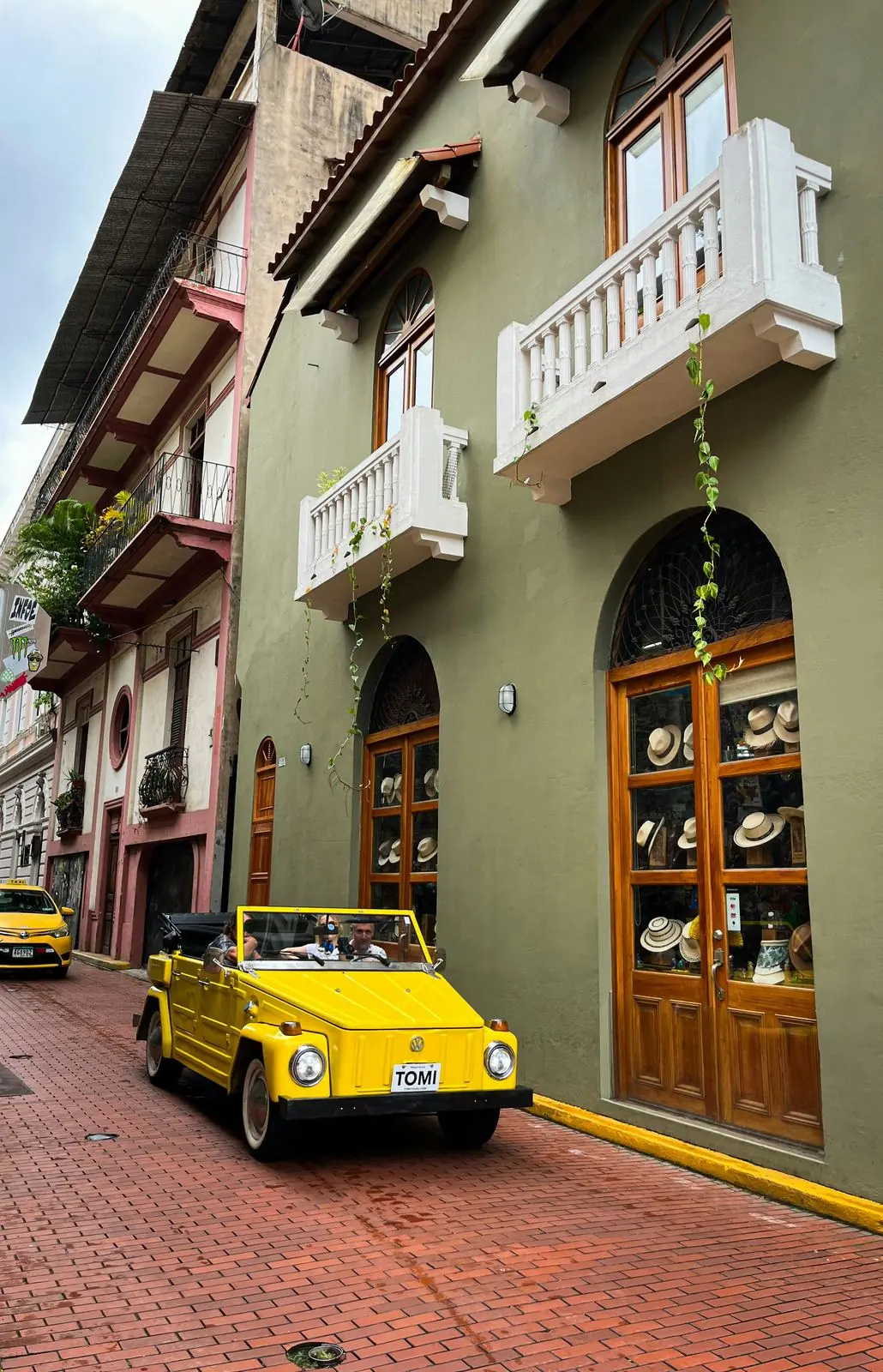
Casco Viejo is one of the most photographically rich neighbourhoods in Latin America. The combination of colonial architecture in every state of decay and restoration, a dramatic peninsula setting surrounded by water, the glittering skyline of the financial district visible to the east, and the Pacific light that comes off the bay — warm, slightly hazy, directional — makes the neighbourhood a genuinely exceptional subject. This guide covers where to be and when, for both serious photographers and phone camera visitors.
Understanding Casco Viejo's light
Panama City sits 9 degrees north of the equator, which means the sun is nearly overhead at midday and moves through a large arc across the sky in the morning and evening. Midday light (11am–2pm) is harsh and unflattering — high contrast, deep shadows, bleached colours. This is the worst time to photograph the neighbourhood for anything except intentional high-contrast black-and-white work.
The golden hours are extraordinary. In the morning, the sun rises over the financial district to the east and rakes across the colonial facades of Casco's streets from behind — creating warm backlighting and long shadows pointing westward. In the evening, it sets directly over the Bay of Panama to the west, turning the sky orange and pink above the water while the city skyline to the east catches the last reflected light. Both windows last approximately 45–60 minutes.
During Panama's rainy season (May–November), afternoon storms build over the city — the cloud formations before and after a storm produce dramatic skies that are excellent backdrops for wide architectural shots. The light immediately after rain, when everything is wet and reflective, is particularly good for street photography.
Golden hour spots
Sunset · 5:30–6:30pm
Plaza de Francia sea wall — facing west
The western tip of the peninsula, where the sea wall faces directly into the sunset, is the definitive golden hour location. The bay turns orange, ships at anchor become silhouettes, and the sky above the canal entrance produces the kind of colour that looks oversaturated even when you haven't touched the saturation slider. Shoot from the sea wall itself for a low horizon line with the sky filling two-thirds of the frame.
Sunrise · 6:00–7:00am
Avenida A facing the financial district — facing east
From the eastern edge of Casco Viejo, the financial district's glass towers catch the sunrise and glow gold while the colonial facades in front of them are still in shade. The contrast between the 21st-century towers and the crumbling colonial buildings in the foreground is the defining Casco Viejo image — and it is best at sunrise, before the street fills with people and before the light becomes overhead.
Both directions · Any time of day
Calle 1a looking south toward the bay
This narrow street ends at the sea, and from any point along it you can compose a frame that includes colonial facades on both sides, the bay at the end of the street, and — if you time it correctly — a ship in the channel framed by the buildings. The perspective compression of a moderate telephoto (85–135mm equivalent) makes the ship appear much closer and larger relative to the buildings.
Rooftop photography
The rooftop bars of Casco Viejo are the most accessible elevated shooting positions. Key considerations:
- Tantalo rooftop — faces west and south, excellent for sunset shots of the bay and for the juxtaposition of colonial rooftops against the financial district skyline. Arrive before 5:30pm on weekends to guarantee a position at the rail.
- Ego y Narciso rooftop — lower elevation than Tantalo but directly above the water on the southern sea wall, giving you an unobstructed view of the bay without buildings in the foreground. Better for minimalist compositions.
- Canal Museum rooftop terrace — free with museum admission ($2), faces directly across the main plaza, excellent for shooting the colonial facades and palm trees of Plaza de la Independencia. Shoot in the morning when the light comes from behind you.
Street photography locations
Street Photography · Morning
The market entrance — Calle 13 and Avenida Central
The area where Casco Viejo transitions into the market district of Santa Ana is where the neighbourhood's everyday life is most visible and concentrated: vendors setting up, delivery motorcycles weaving through narrow passages, Guna women selling molas, schoolchildren in uniforms. The light between 7–9am creates strong directional shadows and warm tones. This is the least photographed part of Casco's surroundings and the most alive.
Street Photography · Evening
Plaza Bolívar at dusk
As the natural light fades and the plaza's string lights and restaurant terraces illuminate, Plaza Bolívar transforms into one of the most naturally photogenic evening spaces in Panama City. The mix of ambient light sources — warm restaurant interiors, cooler street lighting, the blue dusk sky — creates a quality of light that is difficult to reproduce in post-processing and easy to capture in person between about 6:30–7:30pm.
Architecture shots
- The ruins of the French cathedral on Avenida A — an entirely roofless colonial church with walls still standing. The interior, with its open sky visible through the nave and weeds growing through the floor tiles, is one of the most striking architectural subjects in the neighbourhood. Morning light from the east comes through the eastern window openings.
- The Flat Arch of Santo Domingo — the famous arch that convinced canal engineers Panama had no earthquakes. Shoot from slightly below and at an angle to emphasise the arch's improbable flat geometry. Best in shade (avoid direct midday light).
- The wooden balconies of Avenida B — the characteristic Casco Viejo image: French-influenced wooden balconies painted in faded colonial colours, often with laundry or plants, street life below. Shoot from the opposite pavement with a moderate wide-angle; a 28–35mm equivalent gives the right relationship between the balcony above and the street below.
- The decay and restoration contrast — Casco Viejo's most distinctive characteristic is the juxtaposition of immaculately restored colonial mansions (painted in rich ochre, terracotta, and green) directly adjacent to crumbling ruins. This contrast is visually extraordinary and unlike anything in the fully-restored colonial cities of Cartagena or Havana. Frame it deliberately.
On photographing people: Always ask permission before photographing individuals at close range, particularly Guna vendors and elderly residents. Most people are happy to be photographed if asked directly. The Spanish phrase "¿Puedo tomarle una foto?" ("May I take your photo?") is sufficient. Carry small bills — a tip of $1–2 is appropriate when someone poses.
Practical tips for photographers
- Go early. The best light is in the first hour after sunrise. The streets are empty. The cafés are opening. The neighbourhood is quiet. This is the only time you can photograph the plazas and streets without crowds.
- Carry less. Casco Viejo's streets are narrow and active. A single camera body with one versatile lens (24–70mm equivalent) will serve you better than a full bag that draws attention and slows you down. Leave the tripod at the hotel unless you're specifically shooting long exposures at night.
- Rain is your friend. The afternoon rainy season downpours last 1–2 hours and then stop. Go out immediately after — the wet streets reflect the sky and building facades, the air is clear, and the clouds that remain produce extraordinary light. Some of the best Casco Viejo photographs are taken 20 minutes after a storm.
- The financial district at night from Casco. After dark, the view from the sea wall or any rooftop toward the financial district — all glass towers lit against a dark sky, reflected in the bay — is spectacular. Shoot at blue hour (30 minutes after sunset) when the sky still has colour and the buildings are lit. A tripod is useful here.
- Camera security. Casco Viejo's core areas are safe for walking with a camera during the day. Be more aware in the evening and at the neighbourhood's edges. Don't display expensive equipment in obviously transitional areas. Our guides can advise on which streets are appropriate at which times.
Walk the neighbourhood with someone who knows every angle
Our guides have walked these streets daily for years. They know which courtyard has the best morning light, which alley frame you won't find in any guide, and which moments to slow down and pay attention.
Book the Walking Tour →