Who was Henry Morgan?
Henry Morgan was born in Wales around 1635, arrived in the Caribbean as a young man — possibly as an indentured servant, possibly as a soldier — and by his early thirties had become the most feared privateer in the Western Hemisphere. He was not, technically, a pirate. He held letters of marque from the English Crown, which authorised him to attack Spanish shipping and settlements. The legal distinction between privateer and pirate was, in practice, thin to the point of transparency.
Morgan operated from Port Royal, Jamaica, the most notorious city in the 17th-century Atlantic world — a place of extraordinary wealth, extraordinary violence, and an economy built almost entirely on the plunder of Spanish colonial possessions. From Port Royal, he staged a series of raids that escalated in audacity: Portobelo in 1668, Maracaibo in 1669, and then, in 1671, the most ambitious and destructive raid of his career.
Henry Morgan — Key Dates
Born: c. 1635, Wales · Died: 1688, Jamaica · Panama City raid: January 1671 · Knighted: 1674 · Lieutenant Governor of Jamaica: 1674–1683. Morgan was not hanged as a pirate — he died in his bed, wealthy, at approximately 53.
The 1671 raid on Panama Viejo
In December 1670, Henry Morgan assembled the largest privateer fleet ever gathered in the Caribbean: approximately 1,800 men, 36 ships, and enough firepower to take a fortified city. His target was Panama Viejo — Panamá la Vieja — the original Panama City, founded in 1519 on the Pacific coast of the isthmus. It was the richest city in the Americas. All the gold and silver from the mines of Peru passed through here on its way to Spain. Morgan knew this. That was the point.
The fleet crossed the Caribbean, stormed the fortress at San Lorenzo on the Atlantic coast, and then marched overland through the jungle — nine days, through swamp and rainforest, ambushed repeatedly by Spanish forces and indigenous fighters allied with the Crown. By the time Morgan's men reached the Pacific plain, they were starving. Several hundred had died in the crossing. The survivors were furious.
The Spanish governor attempted to defend the city with a force of cavalry and a herd of bulls, which he drove toward the English lines in the hope of breaking their formation. The bulls turned. The cavalry charged anyway. The Spanish were routed in less than three hours. Morgan's men entered Panama City on 28 January 1671.
What followed was not the orderly sacking Morgan's men had expected. The city had been set alight — whether by the retreating Spanish or by Morgan's own forces is disputed by historians — and burned for four days. When the smoke cleared, the richest city in the Americas was rubble and ash. Morgan's men found far less gold than they'd anticipated: the Spanish had loaded much of the city's wealth onto ships and moved it down the coast before the attack. The soldiers were paid a pittance for nine days of jungle hell. Morgan himself was furious. Several of his own officers accused him of hiding the missing gold.
What happened after the raid
Morgan returned to Jamaica with 175 mule-loads of plunder and several hundred prisoners. The haul was disappointing relative to the scale of the operation, but the destruction of Panama City sent a message across the Caribbean: no city was beyond reach.
The raid came at precisely the wrong political moment. England and Spain had signed the Treaty of Madrid in 1670 — weeks before Morgan's fleet set sail — officially ending English-sanctioned attacks on Spanish territory. Morgan had, technically, committed an act of war. He was arrested and transported to London in 1672 to face charges.
He was never tried. Instead, he was feted by English society, given an audience with King Charles II, and eventually knighted in 1674. He returned to Jamaica as its Deputy Governor. The most audacious pirate-turned-privateer in the Caribbean ended his days as an establishment figure, overseeing the prosecution of actual pirates from the comfort of a government house in Port Royal.
Why Casco Viejo was built — and what it has to do with Morgan
The ruins of Panama Viejo still stand 8 kilometres east of modern Panama City — you can visit them today, walk through the cathedral tower Morgan's men looted, and look out over the bay the Spanish ships fled across. They are extraordinary. But the city was never rebuilt on that site.
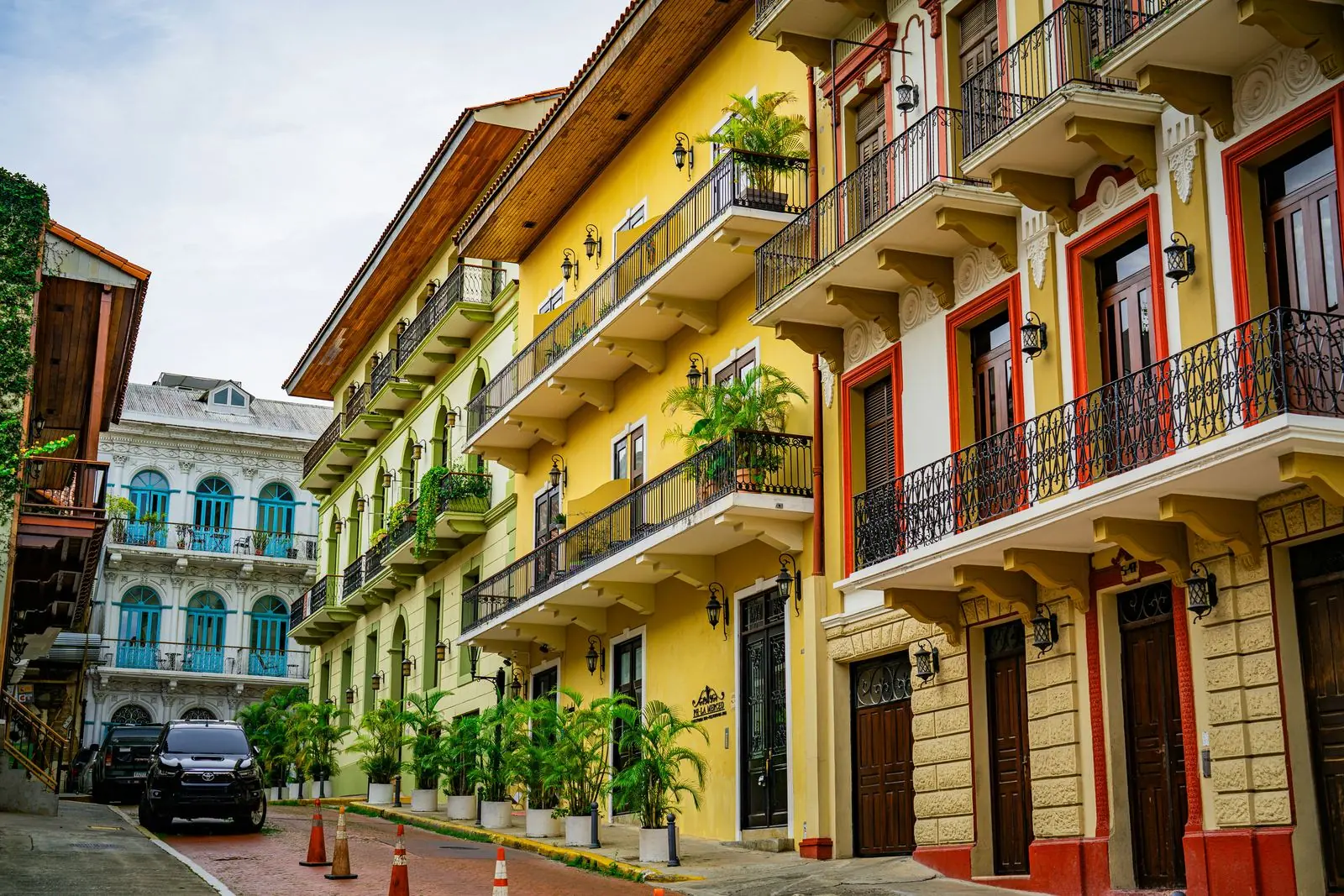
In 1673, the Spanish colonial government relocated what remained of Panama City to a narrow peninsula two kilometres to the southwest. The site was chosen for one reason: defence. The peninsula was naturally fortified on three sides by water, and a massive stone wall — the muralla — was constructed across its only land-facing entrance. The city that rose on this peninsula was designed from its foundations to resist a second Henry Morgan. It is this city — surrounded by water, built on colonial Spanish stone — that we now call Casco Viejo.
The thick walls you walk past on every street in the historic quarter, the sea wall at Plaza de Francia where the dungeons are carved into the rock, the towers that rise above the rooftops at irregular intervals — all of it is a direct architectural response to one Welsh pirate and three hours of battle on a January morning in 1671. Casco Viejo exists because of Henry Morgan.
Visiting Panama Viejo: The original city ruins are a 15-minute Uber from Casco Viejo. The UNESCO World Heritage site includes the cathedral tower, original streets, and a small but excellent museum. Allow 2 hours. Entrance fee approximately $6 USD. Read our full guide: Panama Viejo Ruins — Visiting the Original Panama City.
The Captain Morgan rum connection
Captain Morgan rum was created in Jamaica in 1944 by the Seagram company, which acquired a Jamaican rum distillery and named its flagship product after the most famous Jamaican historical figure — Henry Morgan. The brand chose well. Morgan's image (the swagger, the privateering, the legendary excess) mapped perfectly onto what a rum brand wanted to project in the mid-20th century.
The iconic label — Morgan in a red coat, one boot raised on a barrel, sword at his hip — is a romanticised portrait with no historical basis. No contemporary portrait of Morgan exists. The label is a composite of what 1940s marketing thought a pirate should look like, loosely assembled around a historical name. Morgan himself, by most contemporary accounts, was stocky, hard-drinking, and not particularly glamorous — a military commander rather than a swashbuckling adventurer.
The irony is significant: the rum brand that bears his name is not Panamanian but Jamaican — the island he worked from, not the city he destroyed. Panama has its own rum tradition, centred on Ron Abuelo and Carta Vieja, both produced in the Azuero peninsula from sugarcane grown in one of the best agricultural regions in Central America. If you want to drink rum that has an actual connection to the soil of the country Morgan raided, drink those — not the branded bottle named after him.
Where to experience the history today
Casco Viejo itself is the best monument to what Morgan set in motion. But several specific sites connect directly to the story:
- Panama Viejo Ruins — the site Morgan burned. The cathedral tower, the original streets, the small museum. Read our complete guide.
- Plaza de Francia — in Casco Viejo, at the tip of the peninsula, this plaza commemorates the French canal era but stands on the sea wall the Spanish built after Morgan's raid. The bóvedas beneath it were dungeons. The view across the water toward the canal is exactly what the city's founders saw when they chose this peninsula.
- The Muralla — the original city wall. Sections remain at the Puerta de Tierra (Land Gate), the main entrance to the peninsula that the wall was built to defend. Ask your guide to show you the original stonework.
- Iglesia de San José — home to the famous Altar de Oro (Golden Altar). According to local legend, the altar was painted black by priests to disguise its value when Morgan's forces were approaching. Whether the story is true is uncertain; the altar is magnificent regardless.
- Our pirate walking tour — our guides cover the full Morgan story on the colonial walking tour, including lesser-known details that don't appear in guidebooks.
Walk the streets Morgan made history
Our colonial walking tour covers the full story of Casco Viejo — from the 1671 raid that created the city to the UNESCO listing that saved it. Small groups, local guides, two hours.
Book the Walking Tour →